

Fire safety has evolved far beyond traditional extinguishers and sprinkler systems. Today, modular solutions are transforming how industries, communities, and emergency responders prevent and control fires. These innovations are designed to be flexible, scalable, and highly effective, making them essential in modern safety strategies.
Below are five modular solutions that are reshaping fire suppression in the United States.
Modular Fire Suppression Panels for Buildings
One of the most impactful innovations in fire safety is the use of modular suppression panels. These systems are designed to integrate seamlessly into building infrastructure, offering targeted protection in specific zones. Unlike traditional sprinklers that activate across large areas, modular panels can be programmed to respond only where fire is detected. This reduces water damage and ensures resources are used efficiently.
These panels are particularly valuable in commercial spaces, data centers, and healthcare facilities where sensitive equipment or materials could be damaged by unnecessary water exposure. Their modular design allows building managers to expand or reconfigure coverage as layouts change, making them a long-term investment in safety. The adaptability of these panels ensures that fire suppression remains effective even as facilities grow or evolve.
Skid Unit Systems for Rapid Response
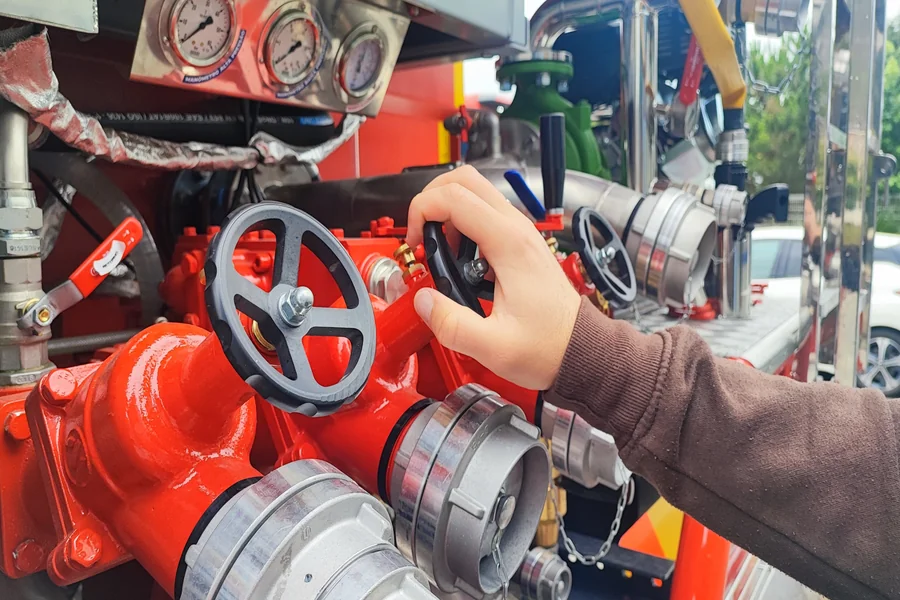
For industries and emergency services that require mobility, skid unit systems have become a game-changer. A skid unit is a compact, self-contained firefighting system mounted on a skid frame, often installed on trucks, trailers, or utility vehicles. These units typically include a water tank, pump, hose reel, and foam system, all designed for quick deployment.
Skid units are especially useful in rural areas, construction sites, and oil fields where permanent fire suppression infrastructure may not exist. Their modular nature means they can be customized with different tank sizes, pump capacities, and foam options depending on the environment. Fire departments and private companies alike rely on skid units for their versatility and speed, ensuring that fires can be tackled before they spread. This solution highlights how modularity enhances mobility and efficiency in fire safety.
Portable Fire Suppression Pods
Another breakthrough in modular fire safety is the development of portable suppression pods. These pods are pre-engineered units that can be placed in high-risk areas such as warehouses, manufacturing plants, or outdoor events. Each pod contains its own extinguishing agent, detection system, and activation mechanism, allowing it to operate independently.
The advantage of suppression pods lies in their flexibility. They can be relocated as needed, providing temporary or permanent protection depending on the situation. For example, a construction site may use pods during active building phases and then move them to another project once complete. Their modular design makes them cost-effective and adaptable, ensuring that fire safety measures can keep pace with changing environments.
Modular Foam Systems for Industrial Applications
Industrial facilities often face unique fire risks, particularly those involving flammable liquids. Modular foam systems are designed to address these hazards with precision. Unlike traditional water-based suppression, foam systems smother fires by cutting off oxygen and cooling surfaces. Their modular design allows facilities to install systems in specific zones, such as chemical storage areas or fuel depots, without overextending resources.
These systems can be scaled up or down depending on the size of the operation. For large refineries, multiple foam modules can be networked together to provide comprehensive coverage. Smaller facilities can deploy individual units where risks are highest. This targeted approach ensures that fire suppression is both effective and efficient, reducing downtime and protecting valuable assets.
Containerized Fire Safety Units for Remote Locations
Remote and off-grid locations often struggle with fire safety due to limited infrastructure. Containerized fire safety units provide a modular solution by packaging suppression systems into transportable containers. These units can include water tanks, pumps, foam systems, and even power supplies, making them fully self-sufficient.
Mining operations, military bases, and remote construction sites benefit greatly from these containerized systems. They can be delivered and set up quickly, providing immediate protection in areas where traditional fire services may not be available. Their modular design also allows operators to expand capacity by adding more containers as needed. This flexibility ensures that even the most isolated locations can maintain high standards of fire safety.
Conclusion
Modular solutions are redefining fire safety and suppression by offering flexibility, scalability, and efficiency. From suppression panels in buildings to skid units for mobile response, these innovations ensure that protection can be tailored to specific environments and risks.
Portable pods, foam systems, and containerized units further demonstrate how modularity enhances adaptability across industries and communities. As fire risks continue to evolve, these solutions provide a smarter, more responsive way to safeguard lives and property.
