

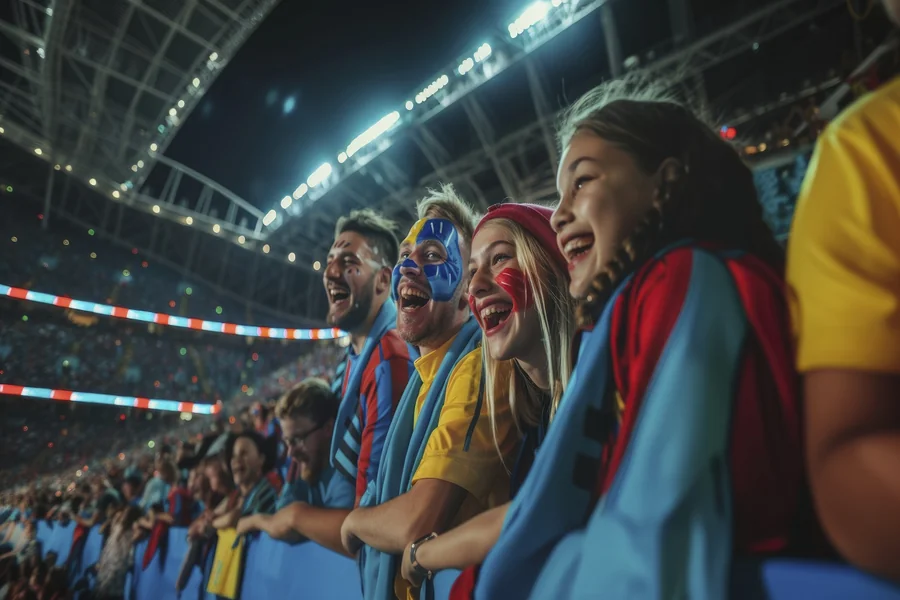
Welcome to a new epoch of international soccer. When the first whistle blows in the summer of 2026 across the United States, Mexico, and Canada, we will not just be watching another tournament; we will be witnessing a fundamental restructuring of the beautiful game. For decades, the 32-team format has been the gold standard, offering a familiar rhythm of group stage jeopardy followed by a brutal 16-team knockout bracket. However, the 2026 FIFA World Cup is expanding to an unprecedented 48 teams.
For the casual fan, this simply means more soccer—a staggering jump from 64 to 104 matches. But as a football analyst who closely monitors tactical trends, squad dynamics, and betting markets, I can assure you that this expansion is not merely an administrative adjustment. It is a seismic shift that will revolutionize global soccer dynamics, alter how nations approach their qualifying campaigns, and completely change the tactical blueprints required to lift the trophy.
In this comprehensive analysis, we will explore exactly why the 48-team format changes everything. From the death of the traditional “Group of Death” to the rising influence of soccer analytics and the new strategies required to find value in match odds, this is your ultimate guide to the future of the World Cup.
The Mathematics of Expansion: Understanding the New Battlefield
To comprehend the tactical shifts, we must first understand the structural mathematics of the World Cup 2026. The original proposal of 16 groups of three was thankfully scrapped in favor of a more sporting format: 12 groups of four teams.
The top two teams from each group will automatically advance to the newly introduced Round of 32. Crucially, they will be joined by the eight best third-placed teams. This single rule change is the catalyst for a massive psychological and tactical shift on the pitch.
The 8-Match Marathon
In previous tournaments, a team had to survive seven matches to become world champions. In 2026, the finalists will have to navigate an eight-match marathon over the course of 39 days.
- The Physical Toll: An extra match in the knockout phase, combined with the extensive travel across the massive North American continent, means that physical endurance will be tested like never before.
- The Importance of Squad Depth: A brilliant starting XI is no longer enough. The nations that will thrive are those with exceptional squad depth. Managers will need a reliable roster of 26 players, heavily utilizing the five-substitute rule to manage muscular load and prevent late-tournament burnout.
The Group Stage Paradigm Shift: A Catalyst for Pragmatism
If we look at the historical dynamics of the 32-team World Cup, a loss in the opening match usually resulted in sheer panic. Teams were forced to open up and play expansive, attacking soccer in their subsequent games to salvage their campaign. The 48-team format, however, provides a massive safety net.
The “Best Third-Place” Phenomenon
Because eight out of the twelve third-placed teams will advance, the mathematical threshold for reaching the knockout stage is drastically lowered. In many scenarios, a single win—or even three draws accumulating to three points—could be enough to sneak into the Round of 32.
From a tactical standpoint, this will heavily encourage pragmatism among the mid-tier and lower-ranked nations.
- The Rise of the Low Block: When a Pot 4 debutant faces a soccer giant like France or Brazil, they know that goal difference is paramount. Rather than attempting to play progressive football, we will see these underdogs deploy highly disciplined, compact defensive blocks (such as a 5-4-1 or 5-3-2).
- Risk Aversion: The objective against elite teams is no longer to secure a shock victory, but rather to avoid a heavy defeat. A 1-0 loss is viewed as a tactical success, preserving goal difference for the crucial fixtures against similarly ranked opponents.
Consequently, the group stage might feature fewer end-to-end classics and more tactical chess matches, where elite nations are forced to patiently pick the lock of stubborn, deep-lying defenses.
Democratizing the Global Game: Emerging Nations and Qualifiers
One of the most profound impacts of the 48-team expansion is how it revolutionizes the global soccer hierarchy long before the tournament even begins. The allocation of tournament slots has been significantly altered:
- Africa (CAF): Increased from 5 to 9 direct slots.
- Asia (AFC): Increased from 4.5 to 8 direct slots.
- North America (CONCACAF): Increased from 3.5 to 6 direct slots (including the three hosts).
The Strategic Overhaul in Emerging Regions
For decades, solid mid-tier nations in Africa and Asia played with a sense of fatalism. Knowing that only a tiny elite group could qualify, long-term youth development often took a backseat to short-term results.
The expanded allocation changes this psychological dynamic entirely. Nations like Uzbekistan, Cape Verde, and Jordan now have a highly realistic, mathematical pathway to the global stage. This is driving a massive influx of investment into soccer analytics, youth academies, and modern coaching infrastructure within these regions.
Furthermore, during the qualifying campaigns, we are seeing these teams adopt more progressive tactical identities. Knowing they have a genuine chance to qualify, they are moving away from purely reactive soccer and beginning to implement possession-based systems that mirror the modern European club game. The 48-team format is effectively raising the technical floor of global soccer.
Tactical Analysis: How the Elite Will Adapt
If the underdogs are going to sit deep and protect their goal difference, how will the traditional soccer giants adapt? The answer lies in advanced tactical systems and the intelligent use of data.
1. Breaking the Low Block with Inverted Fullbacks
Elite nations will no longer be able to rely on simple overlapping fullbacks to generate crosses into a crowded penalty area. Instead, we will see the widespread adoption of inverted fullbacks at the international level. By moving fullbacks into the central midfield during possession, elite teams can create numerical overloads in the center of the pitch. This strategy not only helps in suffocating counter-attacks immediately (counter-pressing) but also allows the creative number 8s to push higher up into the half-spaces to dismantle the opposition’s defensive shape.
2. The Premium on Ball-Playing Center-Backs
When facing a team that refuses to press high, the responsibility of playmaking falls onto the center-backs. Defenders who possess elite passing range and the ability to step into the midfield to break lines will be the most valuable assets on the pitch. If we analyze recent form across major European leagues, the teams dominating possession are those whose central defenders operate as deep-lying playmakers.
3. The Analytics of Set-Pieces
In matches where open-play chances are stifled by a 10-man defense, set-pieces become the ultimate decider. Soccer analytics dictate that dead-ball situations offer some of the highest xG (Expected Goals) opportunities. Elite teams will dedicate significant training time to highly choreographed corner and free-kick routines, employing specialized set-piece coaches to find marginal gains that can break a deadlock.
Finding Value: Soccer Odds in the 48-Team Era
For those who view the beautiful game through the lens of statistics, probability, and soccer odds, the World Cup 2026 presents a fascinating new landscape. The expansion fundamentally alters how we should approach match analysis and market valuations.
Group Stage Betting Dynamics
The public betting markets tend to heavily favor traditional powerhouses (e.g., Argentina, England, Germany). However, the format change means these giants will face opponents they rarely encounter, creating massive disparities in the odds.
- Fading the Favorites on Goal Lines: Because underdogs will prioritize goal difference, backing them on the Asian Handicap (e.g., +2.0 or +2.5) could offer tremendous value. The elite teams do not need to win 5-0; they simply need three points while conserving energy for the grueling eight-match schedule. Once a top-tier team takes a 2-0 lead, expect them to drastically lower the tempo and substitute key players, making massive blowouts less likely than the odds might suggest.
- The “Under” Market in Matchday 3: When the final round of group matches arrives, several teams will calculate that a draw guarantees their progression as one of the best third-placed teams. If two pragmatically minded teams face each other under these conditions, the incentive to attack diminishes entirely. Analyzing the group standings and backing the “Under 2.5 Goals” or even the draw in these specific scenarios is a highly logical, data-backed approach.
Identifying the True Dark Horses
When looking at outright odds for teams to reach the quarter-finals, avoid teams that rely on a single superstar. Instead, look for mid-tier nations with strong defensive metrics (low xGA – Expected Goals Against) and a proven, cohesive pressing system. In a knockout tournament, a team that does not concede high-quality chances has a distinct advantage, as they can drag superior opponents into deep waters and capitalize on swift counter-attacks.
Conclusion: Embracing the Revolution
The 48-team World Cup 2026 will undoubtedly face its share of logistical and administrative challenges. Pundits will debate the dilution of quality in the group stages, and fans will have to adapt to a vastly expanded schedule. However, from an analytical and tactical perspective, this tournament represents a thrilling evolution of the sport.
By lowering the barrier to entry, FIFA has ignited soccer development across the globe, giving emerging nations a tangible reason to evolve. On the pitch, the tournament will become a grueling test of tactical flexibility, sports science, and squad depth. The traditional giants can no longer coast on reputation; they must adapt to break down highly organized, motivated underdogs.
Whether you are a tactical purist analyzing xG maps, a fan cheering for a debuting nation, or an investor looking for value in soccer odds, the 48-team era demands a new level of understanding. Global soccer dynamics have been revolutionized, and the beautiful game will never be the same again.
